
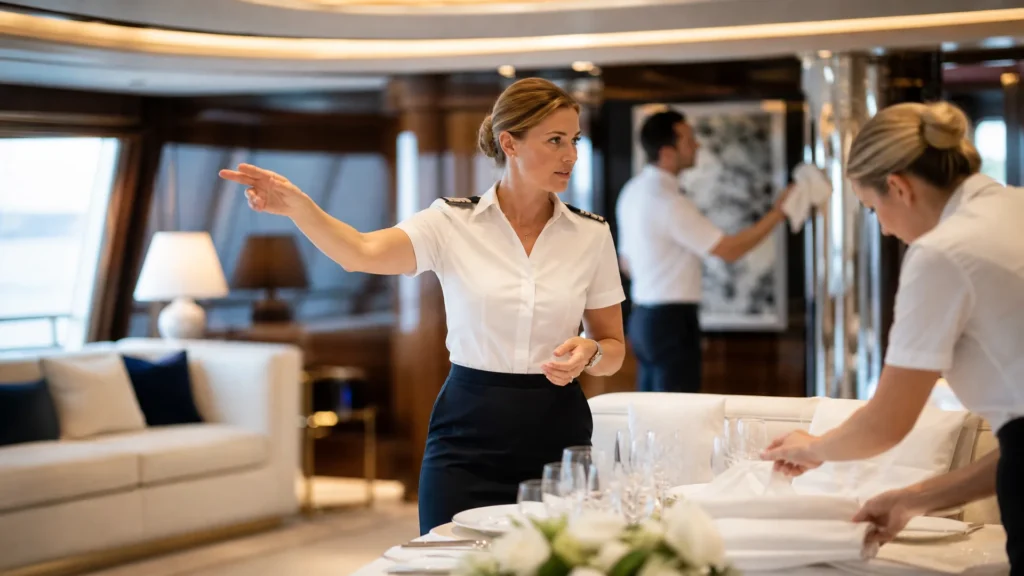
Every guest experience on a superyacht, from the first welcome drink to the last turned-down bed, runs through the interior department. Yet most guides to this side of yachting only cover a single job or a salary table, leaving newcomers unsure how the roles actually fit together. This guide maps the full superyacht interior hierarchy from top to bottom, shows what each rank does day to day, and lays out a realistic path for moving up it.
Understanding the Superyacht Interior Hierarchy
The interior department handles everything guests see, touch, and experience inside the yacht: service, housekeeping, laundry, and often event coordination. At the top sits the chief stewardess (or chief steward), who runs the department. Below that, depending on the vessel, you’ll find a second steward/ess, junior steward/esses, and sometimes specialist positions like a purser or a butler.
This isn’t a rigid formula. Superyacht interior staff positions are shaped by the size of the boat, the owner’s expectations, and how the captain chooses to organize the crew. Two yachts of similar length can run very different interior structures depending on charter versus private use, guest numbers, and the program’s overall service style.
How Interior Department Size Scales with Yacht Size
On a typical 50m+ superyacht, the interior team can range from a single stewardess handling everything to a structured department of six or more, including a chief stew, second stew, purser, and dedicated laundry or spa staff. Smaller yachts often combine roles, so one person might handle service, cabins, and provisioning together. Larger yachts, especially those in full-time charter, tend to split those same duties across several dedicated positions, each with a narrower focus. Knowing where a yacht sits on that scale tells you which job title actually matches which day-to-day responsibilities.
Chief Stewardess Duties and Leadership Responsibilities
The chief stewardess is the department head and the person ultimately accountable for the guest experience. She (or he) sets service standards, plans the guest itinerary’s interior details, and answers directly to the captain on anything happening inside the yacht.
Chief stew responsibilities go well beyond service. The role includes recruiting and training interior crew, resolving guest requests that junior staff can’t handle alone, and acting as the main point of contact between guests, owners, and the rest of the crew. It’s a management job as much as a hospitality one. That’s why captains look for candidates who’ve already proven themselves at second stew level before handing over the department.
Managing Budgets, Inventory, and the Interior Team
Day to day, a chief stewardess manages the interior budget, oversees provisioning and inventory of everything from linens to bar stock, and builds the duty rosters that keep the department running through long charter seasons. She enforces cleaning and service standards, runs briefings before guest turnovers, and trains junior crew on the specific preferences of returning guests or owners. Because this role carries so much operational weight, structured preparation matters. Readers considering this track can look into chief stewardess training and leadership certifications to understand exactly what the jump to department head requires.
Superyacht Steward Job Description and Daily Responsibilities by Rank
A superyacht steward job description changes noticeably depending on rank, but every level shares the same foundation: service, cleanliness, and attention to guest preferences. Junior stewards and stewardesses handle cabin cleaning, laundry, table setting, and service under supervision. As crew move up to second steward/ess, they take on more independent guest interaction, oversee provisioning tasks, and start supervising junior team members during turnovers and events.
Pay tends to track this same ladder, rising as responsibility and independence increase. A full rank-by-rank steward salary and benefits breakdown is useful for setting realistic expectations early in a career.
Second Steward/ess vs. Junior Steward/ess: What Changes
The core difference between these two ranks is autonomy. A junior steward/ess follows instructions closely, learning the yacht’s standards and the owner’s or guests’ preferences under close supervision. A second steward/ess is trusted to run service sections alone, make judgment calls during guest interactions, and step in for the chief stew when needed. Second stews also typically take a lead role in training new junior crew, which is often the first real test of whether someone is ready for further promotion.
Superyacht Housekeeping Crew Responsibilities and Cabin Standards
Housekeeping runs through every interior rank. Superyacht housekeeping crew responsibilities include daily cabin servicing, laundry and linen management, deep cleaning during guest changeovers, and maintaining the exacting presentation standards owners and charter guests expect. Cabin turnover between charters is one of the most time-pressured tasks in the department, often requiring a full reset of multiple guest cabins in just a few hours. Crew who consistently hit these standards under pressure are the ones who get noticed for advancement.
Superyacht Purser Role Responsibilities and What a Butler Does Onboard
Larger yachts, and those running frequent or complex charters, often add specialist interior positions beyond the standard steward ranks. The two most common are the purser and the butler, and they serve very different functions.
The superyacht purser role centers on administration rather than direct service. A purser manages guest documentation, crew payroll support, financial record-keeping, provisioning logistics, and guest itinerary coordination such as shore excursions and reservations. It’s a role that suits someone who’s strong on organization and detail, even if they’re less focused on hands-on service delivery. Anyone drawn to this side of interior work should look at a dedicated purser training course guide to understand the qualifications the position typically requires.
What Does a Superyacht Butler Do on Larger Yachts
A butler, by contrast, is focused entirely on formal service and VIP guest care. What does a superyacht butler do on a day-to-day basis? Silver service dining, wardrobe and packing assistance, in-suite drink and canapé service, and the kind of anticipatory personal attention associated with high-end hotel butlers. On yachts large enough to justify the position, a butler often works closely with the chief stew but reports through a separate service line focused purely on principal or VIP guest care, rather than general department administration.
How to Advance From Steward to Chief: Superyacht Stewardess Career Path
Knowing how to advance from steward to chief starts with realistic expectations about timing. Most crew spend their first 12 to 18 months as a junior steward/ess before being considered for promotion, and it typically takes several years of consistent performance across multiple ranks before reaching chief stewardess. The superyacht stewardess career path isn’t just about time served. It’s about demonstrated competence at each level before moving to the next.
A junior steward/ess who masters silver service, cabin standards, and guest etiquette in their first 12-18 months is typically the one tapped for promotion to second stew ahead of peers. From second stew, the next jump to chief usually requires proven leadership, budget management experience, and the trust of a captain willing to hand over department responsibility. For a broader view of how this timeline compares across departments, see career progression ranks and timelines.
Certifications and Skills That Accelerate Promotion
Formal training speeds up this path considerably. Interior crew turnover tends to run higher in entry-level positions than at chief stew level, which is part of why captains prioritize candidates with formal hospitality and etiquette training over experience alone. Certifications in silver service, wine and beverage knowledge, and guest relations all signal readiness for more responsibility, as does any prior hospitality management background. A full breakdown of what’s expected at each stage is available in certifications required for every crew role, and crew aiming specifically for the chief track can enroll directly in the Advanced Stewardess Career Course to build those competencies systematically rather than piecemeal.
Guest Service Excellence and Salary Expectations Across Interior Roles
Every role in the interior department, from junior steward/ess to purser to chief stew, exists to deliver a seamless guest experience. Housekeeping standards, service timing, discretion, and anticipation of guest needs combine to create the polished feel that owners and charter guests expect from a well-run superyacht. When one link in that chain falls short, guests notice, which is why hiring captains weigh training and attitude as heavily as raw experience.
Compensation across the department generally scales with this level of responsibility and guest-facing trust. Junior positions earn less but offer the fastest route into the industry, while chief stewardess roles command markedly higher pay in recognition of the leadership and accountability involved. Because these figures vary by yacht size, program, and region, a detailed interior crew salary by rank breakdown is the better resource for exact numbers.
For anyone starting out, building a strong service foundation matters more than chasing a title early. SYTA’s foundations of high-end hospitality course is designed to give new crew the etiquette, service, and cabin-standard skills that hiring captains look for at entry level. SYTA’s Deck-Stew and Advanced Stewardess Career Courses are built around the exact competencies hiring captains and chief stews look for at each rung of the interior ladder, giving crew in Cape Town and beyond a structured way to move from a first interior role toward department leadership.