
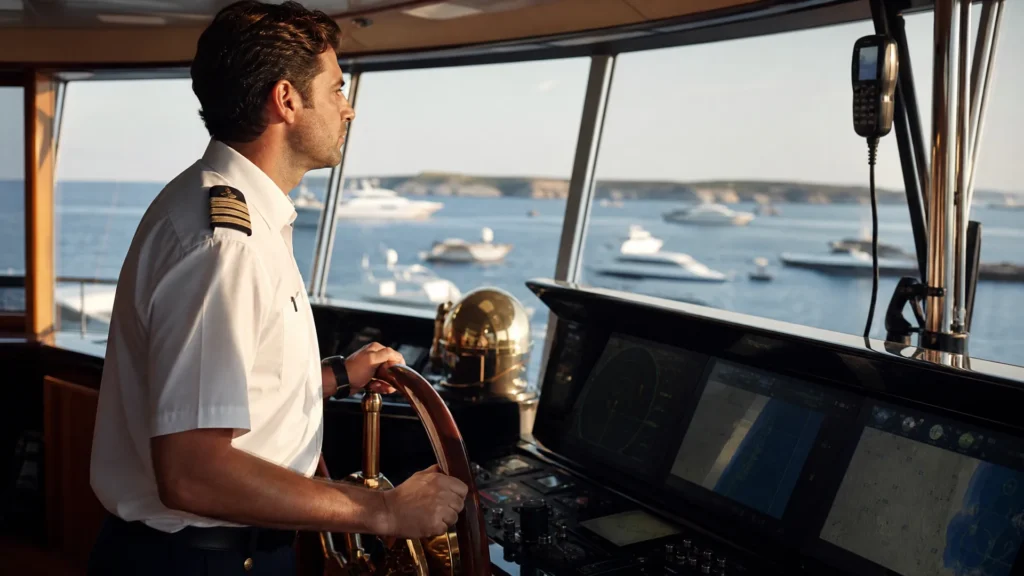
Deck Officer Superyacht Training: Certifications and Career Progression
Deck officer superyacht training is a specialised discipline, and the gap between a standard commercial maritime qualification and what superyacht owners actually expect from their bridge officers is wider than most candidates realise. Whether you’re stepping into your first watchkeeping role as a second officer or preparing to move into chief officer territory, your certification path and your practical training need to reflect the specific demands of large private vessels. This guide maps the career ladder, the certifications, and the realistic progression that gets you there.
Why Generic Maritime Training Falls Short for Superyacht Deck Officers
Commercial shipping syllabi are built around bulk carriers, container ships, and tankers. The priority is port logistics, cargo operations, and managing large multi-department crews across long ocean passages. Those are legitimate skills, but they’re not the skills that keep a 60-metre private vessel operating safely in a busy charter season.
Superyacht bridge operations require officers to manage GMDSS communications, flag-state compliance, and guest safety protocols simultaneously, often with a bridge team of just two people. The risk profile is fundamentally different from a container route with a crew of 20-plus. When you’re navigating a confined Mediterranean anchorage with owners on board and a tender operation running, the communication demands and decision-making pressure bear no resemblance to anything a commercial officer course prepares you for.
Flag-state compliance adds another layer. Large private vessels operate under flag states such as the Cayman Islands, Marshall Islands, Malta, and the Isle of Man, each with its own manning requirements that overlay standard STCW certification. An officer who doesn’t understand how LY3 (MCA Large Yacht Code) requirements interact with their certificate of competency is a career risk to themselves and a liability to any captain who hires them.
That knowledge gap isn’t just theoretical. Officers who arrive on board with purely commercial tickets routinely struggle with ISM/ISPS implementation in a private vessel context, with the guest-facing safety briefings required on charter yachts, and with the tender and toy management responsibilities that fall squarely on the deck officer team. Filling that gap is precisely why purpose-built deck officer superyacht training exists.
The Superyacht Deck Officer Career Ladder: Roles and Responsibilities
Understanding where you sit on the career ladder is the first step to knowing what training you need. Understanding the broader career progression for superyacht deck crew helps put officer-level roles in context, but the three officer ranks each carry distinct responsibilities.
Second Officer Superyacht: Watchkeeping, Navigation, and Safety Systems
The second officer is the entry point into officer-level command. On most vessels, the second officer holds primary responsibility for safety equipment, liferafts, EPIRBs, fire detection systems, and GMDSS communications. Watchkeeping at this level means maintaining a continuous bridge watch, managing radar and ECDIS, and making real-time navigation decisions within the standing orders set by the captain or chief officer.
Second officer superyacht roles also carry significant responsibility for crew safety training, muster drills, and maintenance of the vessel’s safety management records under the ISM Code. This is the rank where good habits around documentation and compliance get built, or don’t. Getting them right at this stage defines how quickly you progress upward.
First Officer Yacht: Command Readiness and Guest-Facing Leadership
The first officer yacht role sits directly below the captain. At this level, deck officer certification and practical command readiness converge. First officers deputise for the captain, which means they need to be genuinely prepared to assume command, not just administratively capable, but confident and decisive in the wheelhouse.
Guest-facing leadership is a significant part of the first officer role on a charter or private yacht. Safety briefings, emergency drills conducted in front of owners and guests, and clear crew communications during complex manoeuvres all fall within scope. First officers also typically manage the deck department schedule, tender operations, and passage planning sign-off.
Chief Officer Training Yacht: Bridging Officer and Captain
The chief officer is, in most contexts, the captain-in-waiting. A 60-metre superyacht operating under MCA Large Yacht Code requires its chief officer to hold a Master Mariner certificate of competency alongside yacht-specific endorsements, a combination no standard commercial officer course packages together.
Chief officer responsibilities extend across ISM/ISPS Code implementation, provision and stores management, crew certification tracking, and the full safety management system. At this level, ISPS Code compliance training for superyacht officers is a core operational responsibility. Chief officers are also expected to mentor junior officers and deckhand crew, which means bridge resource management skills matter on both a technical and a human level.
For officers ready to look beyond chief officer, what it takes to reach captain level on a superyacht outlines the final step in this progression.
Core Deck Officer Certifications and What They Actually Qualify You For
STCW Officer of the Watch (OOW) and Management-Level Endorsements
The STCW framework underpins all officer certification. The core pathway runs from OOW (vessels under 500 GT) through OOW Unlimited, then to Chief Mate, and ultimately Master Mariner, the management-level certificate required for command and, as noted above, for chief officer roles on larger LY3 vessels.
Each tier has its own sea-time requirement. OOW Unlimited requires 12 months of approved sea service at officer level following your initial qualification. Chief Mate requires a further period of sea time as an officer of the watch. Full STCW certification requirements for superyacht crew detail the baseline standards everyone in this pathway must meet.
Yacht-Specific Endorsements: Sail, Large Yacht, and MCA Codes
STCW certificates establish your competency floor. Yacht-specific endorsements establish your market value. The MCA Large Yacht (LY3) Code is the primary regulatory overlay for commercial yachts above 24 metres operating with paying guests. Flag states including the Cayman Islands and Isle of Man commonly require compliance with LY3 or equivalent yacht codes for officer manning.
Sail endorsements matter for sailing superyacht berths, which remain a meaningful part of the global fleet. Beyond LY3, officers working in the expedition and explorer yacht sector will encounter additional operational requirements tied to polar code or extended-range passage planning.
Recruitment agents consistently observe that officers who hold both their STCW management-level certificate and a recognised yacht endorsement move through the hiring process significantly faster than those with commercial tickets alone. Owners and captains want proof of yacht-world fluency, not just regulatory compliance.
Superyacht Bridge Operations and Technical Training That Sets Officers Apart
Yacht bridge operations in 2026 bear little resemblance to what they were a decade ago. The growing proportion of the fleet exceeding 50 metres means ECDIS integration, dynamic positioning awareness, and advanced radar/ARPA operation are now standard expectations on vessel bridge teams.
ECDIS proficiency is a legal requirement for officers on SOLAS vessels above certain thresholds, and many large private yachts fall into this category. Officers who arrive with only paper chart navigation experience are a step behind from day one. Radar and ARPA training in a superyacht context means interpreting traffic in high-density coastal anchorages, not just open-ocean collision avoidance.
Bridge resource management on a superyacht is structurally different from what commercial shipping BRM trains for. Commercial BRM is designed for large crews on defined container routes; on a superyacht with a bridge team of two managing a charter in confined anchorages, every crew communication, every handover, and every navigation decision carries more direct consequence. Yacht-specific BRM training teaches officers to lead under those conditions.
Dynamic positioning awareness is increasingly relevant as expedition yachts and charter vessels operate in areas where anchoring is restricted or prohibited. Officers don’t need full DP certification for most superyacht roles, but understanding DP principles and being comfortable assisting DP operations is a differentiator in the current hiring market.
Building Your Officer Development Pathway: A Step-by-Step Progression
A realistic pathway from qualified deckhand to chief officer spans roughly six to eight years, depending on sea-time accumulation and the speed of certification progression.
Stage 1, Deckhand to Qualified Deck Officer: Complete your STCW Basic Safety Training, build sea time as a deckhand, and sit your OOW <500 GT qualification. This typically requires at least 12 months of documented sea service.
Stage 2, Second Officer: With your OOW in hand, take a second officer berth. Focus on building watchkeeping hours, completing your GMDSS General Operator Certificate if not already held, and gaining familiarity with ISM documentation aboard a managed vessel.
Stage 3, First Officer: Progress to OOW Unlimited as sea time allows. Seek out vessels where you’ll be exposed to genuine passage planning responsibility and guest-charter operations. First officer yacht roles reward officers who are already comfortable in guest-facing safety scenarios.
Stage 4, Chief Officer: Work toward Chief Mate certification, then Master Mariner if your target fleet requires it. Complement your STCW qualifications with LY3 overlay training and yacht-specific BRM.
Cape Town is a practical base for this progression. SYTA operates from Cape Town and offers access to Atlantic passage opportunities that generate deep-sea sea time efficiently, relevant for officers building toward OOW Unlimited and beyond.
Salary expectations and career progression for superyacht crew gives you a realistic picture of what each stage of this pathway looks like financially and professionally.
How to Enrol in SYTA’s Deck Officer Training Programme
SYTA’s deck officer superyacht training is built specifically around superyacht operations, from ECDIS and radar watchkeeping on large private vessels to ISM/ISPS compliance, tender management, and the guest-safety briefings that define the superyacht officer role. It’s not a commercial syllabus with a yacht sticker on it.
Entry requirements vary by course level. For second officer entry-level programmes, you’ll need STCW Basic Safety and documented sea service as a deck crew member. Management-level programmes require an existing OOW certificate. If you’re unsure where your current certification sits against the pathway, start with an honest assessment of your sea-time log and any endorsements already held.
The full range of superyacht crew training courses covers every stage of this pathway. When you’re ready to move, use the course finder to identify the right programme for your current rank, or get in touch directly with SYTA to map your specific certification gaps before you commit to a course.