
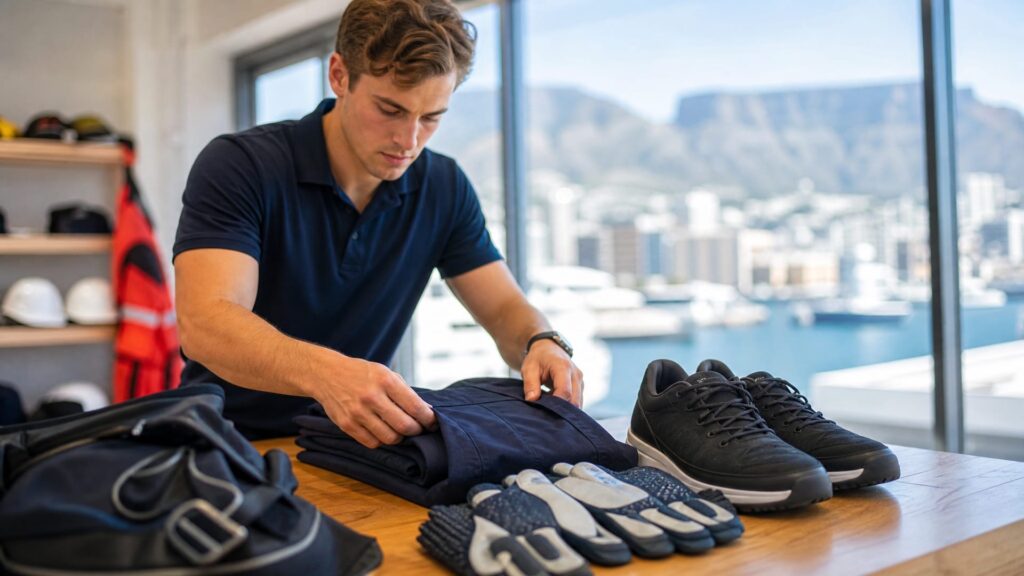
Packing for your first superyacht job takes more than filling a suitcase with generic maritime apparel. Your superyacht crew clothing checklist has to reflect your department’s actual duties, the vessel’s standards, and the safety regulations that vary between deck, interior, and engineering roles. Arrive at training or an interview unprepared, and you’ve signalled a lack of industry awareness before you’ve even stepped aboard.
This guide connects your packing decisions to real training pathways and certification requirements in Cape Town. You need gear that performs during practical assessments and meets the standards captains and crew agents actually hold you to.
Understanding Superyacht Uniform Standards Before You Pack
Uniform expectations shift with vessel size, flag state, and operational profile, so broad generalisations are dangerous for new recruits. What works on a 40m private cruiser may fall well short on a 70m charter vessel operating under strict commercial codes.
Why Generic Packing Lists Fail New Crew
Most online packing guides ignore the link between training performance and onboard readiness. SYTA instructors running 2026 deck and interior course debriefs report that new crew who arrive with appropriate footwear and work-ready clothing consistently perform better in practical assessments, they’re not distracted by ill-fitting or unsafe gear.
Generic lists also miss the gap between hiring and receiving your official ship’s uniform. You can’t count on the vessel handing you everything the moment you arrive.
Bring the wrong items and you waste cabin space, and you make a poor impression during your probationary weeks.
Department-Specific Expectations in 2026
Deckhands on vessels over 60m typically need two sets of branded polo shirts, three pairs of navy shorts or trousers, and steel-toe, non-marking deck shoes as baseline kit. Interior departments call for different fabrics, cuts, and grooming kits built around formal service rather than marine durability.
Engineering and galley teams face flame-resistant and hygiene mandates that override looks entirely. Understand these distinctions before you pack, and you’ll avoid costly replacements and meet compliance standards from day one.
Your yacht crew uniform requirements depend entirely on your department and the operational profile of your target vessel.
Deckhand Packing List: Functional Gear and Safety Essentials
Deck operations demand equipment that protects you from harsh marine environments while letting you move freely during mooring and tender operations. Functionality beats appearance every time in this department.
On-Duty Deck Uniform Requirements
Standard deck uniforms prioritise UV protection, quick-drying fabrics, and visibility during low-light manoeuvres. Navy or white polo shirts and shorts remain industry staples, but fabric weight and weave matter as much as colour.
Pack non-marking soles that grip wet teak without scuffing the deck. Steel-toe or composite-toe options are increasingly required for line handling and anchor operations, to prevent crush injuries.
The Advanced Deckhand Career Course includes hands-on deck gear familiarisation that directly informs what deckhands should prioritise when packing for their first job.
Personal Protective Equipment and Wet Weather Gear
Over 90% of entry-level crew placements in 2026 require valid STCW Basic Safety Training certification before boarding, and that training includes mandatory PPE familiarisation. Sit through it, and you’ll know exactly which waterproof layers, gloves, and eye protection suit real working conditions rather than marketing brochures.
Wet weather gear needs to allow full range of motion for rope work while keeping your core temperature stable through extended watches. Investing in quality foul-weather jackets and bibs pays off on your first Atlantic crossing or Mediterranean winter season.
Completing an RYA Powerboat Level 2 course specifies the wet-weather gear and footwear you should pack for tender operations.
Off-Duty and Shore Leave Apparel
Crew mess and shore leave attire still reflects professional standards, even off duty. Smart casual clothing in neutral colours shows respect for the yacht’s reputation during guest interactions in port.
Avoid distressed denim, offensive graphics, or revealing cuts that might embarrass the captain during a chance encounter with owners or charter guests. Pack versatile pieces that move easily from crew lunch to exploring coastal towns without a full outfit change.
Your deckhand packing list has to balance rigorous work demands with presentable downtime wear suited to close-quarters living.
Stewardess Packing List: Interior Service and Grooming Standards
Interior service demands immaculate presentation that survives long hours of physical activity while staying elegant during guest-facing moments. Every item in your wardrobe has to work both functionally and aesthetically.
Service Uniform and Formal Evening Wear
Crisp white blouses, tailored skirts or trousers, and polished black shoes form the foundation of most interior uniforms. Fabric choice matters: synthetic blends resist wrinkles during twelve-hour shifts better than pure cotton or linen.
Formal evening wear for cocktail parties and gala dinners calls for floor-length gowns or sophisticated separates that match the yacht’s luxury branding. Neutral tones like black, navy, or champagne give you maximum versatility across event themes and owner preferences.
SYTA’s Advanced Stewardess Career Course includes a dedicated module on the uniform standards and grooming protocols used by top-tier charter yachts, and it directly shapes what interior crew should pack.
Grooming Kit and Personal Presentation Essentials
Personal grooming standards in the superyacht industry sit well above typical hospitality benchmarks. You need professional-grade hair tools, subtle makeup palettes, and skincare products that hold up despite humidity, salt air, and irregular sleep.
Nail care supplies, lint rollers, and a portable steamer are non-negotiable superyacht crew essentials for keeping uniforms crisp between laundry cycles. Invest in quality hangers and garment bags to protect delicate service wear during transit and storage.
Exploring superyacht interior training courses sets the grooming benchmarks that should inform your packing before you accept a contract.
Cabin Living and Laundry Considerations
Shared cabin spaces demand compact, organised storage that respects your roommate’s territory. Vacuum-sealed bags and collapsible organisers stretch limited drawer space while keeping seasonal items accessible.
Laundry facilities run on strict schedules shared among all crew, so pack enough basics to rotate through extended wash cycles. Quick-dry underwear and moisture-wicking base layers cut bulk and simplify upkeep during busy charter periods.
Your stewardess packing list superyacht strategy has to account for communal living alongside demanding service standards.
Engineering and Galley Crew Clothing Requirements
Technical departments prioritise safety compliance and hygiene over fashion, and regulation dictates most wardrobe choices here. Flame resistance, chemical protection, and food safety standards drive every purchasing decision in these roles.
Technical Workwear and Flame-Resistant Standards
Engineering staff need flame-resistant coveralls, anti-static footwear, and impact-resistant gloves rated for specific machinery hazards. These items often come vessel-specific, but bringing personal backups covers you during supply delays.
Certification coursework clarifies which PPE categories apply to your rank and engine room configuration. Never assume generic workshop gear meets maritime safety codes; verify it against STCW and flag state requirements.
What crew wear on duty in technical spaces depends on the hazard assessments documented in the vessel’s safety management system.
Galley-Specific Hygiene and Safety Apparel
Galley crew must hold to hygiene standards that prevent contamination while guarding against burns, cuts, and slips. Non-slip clogs, chef whites, and hairnets are baseline requirements enforced during health inspections.
Specialised aprons, oven mitts, and cut-resistant gloves supplement standard uniforms depending on station assignment and menu complexity. Pack personal knives and small tools in roll cases that comply with ISPS security screening.
These specialised clothing requirements tie directly to certification coursework, where instructors demonstrate proper usage and maintenance.
Yacht Crew Interview Outfit: Making a Professional First Impression
Interview attire signals your understanding of industry standards before you’ve earned the right to wear the uniform. Dress appropriately and you show respect for the process, and confidence in your own professional identity.
Dressing for Agency Meetings and Captain Interviews
Business casual is the safest choice for initial screenings: tailored trousers, collared shirts, and closed-toe shoes convey seriousness without presumption. Avoid nautical themes or yacht-branded merchandise unless asked for specifically; you haven’t earned those insignia yet.
Agents provide role-specific uniform guidance during placement, which makes getting signed by a crew agent a useful resource for interview outfit and packing prep.
Clean, pressed clothing and minimal accessories show an attention to detail that translates directly to onboard service standards.
Adapting Your Look for Virtual vs. In-Person Screenings
Virtual interviews need careful attention to lighting, background, and upper-body presentation, since the camera crops out your lower half. Solid colours photograph better than patterns, and proper framing keeps your professional appearance reading clearly on screen.
In-person meetings demand full ensemble coordination, including shoes, belt, and grooming details visible only at close range. Practice sitting and standing in your chosen outfit so you’re comfortable through an extended conversation.
Your yacht crew interview outfit should mirror the professionalism expected aboard, without mimicking uniforms you don’t yet own.
Superyacht Crew Essentials Beyond Clothing
Documents and personal items take up critical space in your luggage and in your career trajectory alike. Neglect the paperwork or overpack the trinkets, and your readiness suffers regardless of how good your wardrobe looks.
Certification Documents and Training Records
Original certificates, medical records, and your seaman’s book need to travel in waterproof document holders, separate from checked luggage. Digital backups stored securely in the cloud give you redundancy against loss or damage in transit.
An ENG1 medical certificate is a mandatory document that must be packed alongside your uniforms; treat it as non-negotiable as any clothing essential. Expired or missing documentation stops boarding regardless of your qualifications or references.
Organise papers chronologically, with tabs for quick access during customs, immigration, and sign-on.
Compact Personal Items for Limited Cabin Storage
Toiletries, medications, and electronics should fit in a single dopp kit without spilling onto shared bathroom shelves. Multi-use products and travel-sized containers save space while covering your daily needs on extended voyages.
Noise-cancelling headphones, a blackout eye mask, and a power bank support rest and communication through demanding watch schedules. Choose sentimental items carefully; one meaningful photo takes up less emotional and physical space than a whole collection.
Non-clothing essentials have to comply with maritime regulations and vessel policy just as strictly as your uniform selections.
Aligning Your Packing List With Training and Certification Pathways
Smart packing comes from understanding your role’s actual demands, not guessing based on social media. Training programmes close the gap between aspiration and operational reality by putting you in genuine working conditions.
How Course Prep Informs Smart Packing Decisions
Accredited courses simulate onboard environments where the wrong gear becomes obvious fast, during practical exercises. Instructors give feedback on equipment choices that saves you money and embarrassment before your first contract.
Training ecosystems connect classroom learning with industry supplier relationships, and that reveals which brands and specifications professionals actually trust. This insider knowledge turns a vague what to pack for yacht crew job search into a precise shopping list aligned with what employers expect.
Enrolment clarifies the exact role-specific needs that no generic article can cover in full.
Avoiding Costly Mistakes Before Your First Contract
Buying expensive gear too early risks wasting money on items that don’t match your eventual vessel’s standards or department requirements. Wait until training confirms your direction before you invest heavily in specialised equipment.
Borrowing or renting gear during courses lets you test without commitment, while building relationships with experienced crew who’ll give you honest product opinions. This approach heads off buyer’s remorse and keeps every purchase tied to your actual career path.
This checklist gives you a foundation, but it can’t replace personalised advice from instructors who know your specific goals and target vessels.