
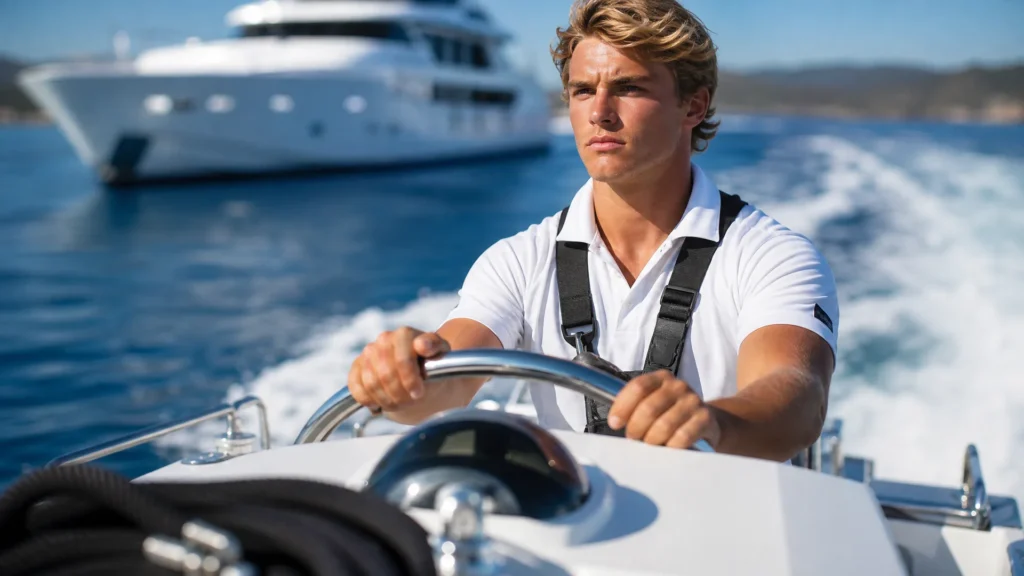
If you’re building a CV for your first yacht job, one certificate keeps showing up on hiring checklists: RYA Powerboat Level 2. It’s not just a nice-to-have. For entry-level deckhands, it’s often the difference between a shortlisted CV and one that never gets a reply.
Most articles online explain this course from a leisure boating angle: weekend sailors learning to handle a runabout. That’s not the world superyacht crew work in. On board, this certificate is a professional tool. It ties directly to tender operations, guest safety, and how quickly a new deckhand can start pulling their weight.
What Is the RYA Powerboat Level 2 Course for Yacht Crew?
The Royal Yachting Association issues the RYA Powerboat Level 2 course. The RYA is the UK body that sets the standard for recreational and professional boating qualifications. It teaches the practical skills needed to safely helm a small powerboat: launching and recovery, close-quarters handling, coming alongside, man-overboard drills, and basic navigation.
On a superyacht, that “small powerboat” is the tender. Crew use it constantly. That’s why the qualification is recognized worldwide as the entry standard for anyone who might get behind its wheel.
Why Captains Ask for This Certificate Specifically
Captains don’t ask for a generic boat-handling background. They ask for RYA Powerboat Level 2 by name because it’s a known, testable standard. A candidate holding it has already shown they can handle the specific maneuvers a tender driver needs, under supervision, before ever setting foot on the boat.
That predictability matters when a captain hires someone they’ve never worked with. It removes guesswork from an interview and gives them a concrete reason to trust a first-time applicant with the tender.
How RYA Powerboat Level 2 Complements STCW Basic Safety Training
STCW Basic Safety Training and RYA Powerboat Level 2 solve different problems. That’s exactly why crew need both. STCW covers survival at sea, firefighting, first aid, and personal safety. It’s the baseline every crew member must hold to work legally on a commercial vessel. It doesn’t teach anyone to drive a boat.
Powerboat Level 2 fills that gap. It’s the hands-on operational skill that turns a safety-trained newcomer into someone a captain can actually put to work. Neither certificate substitutes for the other. Together, they form the practical starting point for a deck career.
Certifications Every Entry-Level Deckhand Needs Together
Think of STCW as the ticket that lets you work on a yacht, and Powerboat Level 2 as the ticket that lets you be useful once you’re there. Recruiters and captains scan CVs for both, often in the same glance.
The STCW Basic Safety Training course and the powerboat certificate are frequently listed side by side in job adverts for green deckhands. Missing either one tends to knock a CV out of contention before an interview is even offered. For a wider view of what else recruiters expect to see, the certifications required for every crew role lays out how these pieces fit together.
Tender Handling and Guest Transfer Duties on Superyachts
On a working superyacht, the tender is effectively the crew’s daily vehicle. Crew use it for guest drop-offs, deploying water toys, and shuttling provisions between the boat and shore. A deckhand who already holds a powerboat qualification needs far less on-the-job supervision than one who’s never driven anything larger than a dinghy at home.
That matters because tender runs aren’t occasional tasks. On a busy charter, they can happen several times a day, often with guests aboard, sometimes in tricky harbor traffic or choppy conditions.
Superyacht Tender Operations Training in Practice
Tender operations training under the RYA syllabus covers the exact scenarios deckhands face: coming alongside a swim platform without a hard knock, judging distance in a crowded anchorage, and reacting correctly if someone goes overboard. These aren’t abstract skills. Crew rehearse them until they become second nature.
Untrained crew are a liability in these situations, and captains know it. A poorly judged approach to a yacht’s swim platform can damage the tender, damage the yacht, or worse, injure a guest.
Where the Powerboat Certificate Fits Into a Deckhand’s Daily Role
For a deckhand, the powerboat certificate isn’t a one-time box to tick. Crew reference it constantly, every time a rota assigns tender duty, every time a captain decides who’s ready to run a guest transfer solo.
Crew who hold it get handed more responsibility earlier. Those who don’t often spend their first months watching from the sidelines while more qualified crew handle the watersports and transfers that make up so much of daily deck work. This sits alongside the broader deckhand training requirements that shape how quickly a new crew member can move up.
RYA Powerboat Level 2 Course Duration, Cost, and Where to Do It in Cape Town
A typical RYA Powerboat Level 2 course runs for two days, combining classroom theory with on-water practical training. That short timeframe is part of why it’s such an easy addition to a broader crew training trip. It doesn’t demand weeks away from job hunting or work.
Course pricing varies depending on the provider and whether it’s bundled with other qualifications. It’s worth checking current rates directly with a training provider rather than relying on a single fixed figure. For a broader sense of how this fits into your overall training budget, see what crew training actually costs.
What the Course Costs and How Long It Takes
Because the course is compact, most career-changers pair it with STCW rather than booking a separate trip. Cape Town has become a hub for exactly this kind of combined training, largely because the city offers sheltered water for practical sessions alongside established STCW providers.
At Superyacht Training Academy in Cape Town, RYA Powerboat Level 2 runs alongside STCW Basic Safety Training. That lets career-changers complete both a practical certification and their mandatory safety training in a single, efficient trip. If you’re mapping out logistics, the STCW courses in Cape Town page covers scheduling for that side of the training.
How a Powerboat Certificate Strengthens Your First Yacht Job Application
Hiring for entry-level deckhand roles moves fast, and recruiters often spend seconds per CV. STCW alone tells them you’re legally allowed to work. It doesn’t tell them you’re ready to be handed the tender keys.
Captains and mates hiring entry-level deckhands routinely list RYA Powerboat Level 2 as a preferred, and often required, certificate. It proves a candidate can safely drive the tender for guest transfers, watersports, and provisioning runs from day one. That’s a concrete, checkable skill in a stack of CVs that otherwise look similar.
Building a Competitive Entry-Level Deckhand CV
For someone with no prior yacht experience, practical certificates carry real weight. They replace the work history a first-time applicant doesn’t have yet. Alongside STCW, the powerboat certificate signals genuine commitment to the industry, not just curiosity about it.
If you’re still assembling your CV, building a standout yacht crew CV covers how to present these certifications so they catch a recruiter’s eye rather than getting buried in a list of qualifications.
SYTA advises prospective deckhands to book RYA Powerboat Level 2 and STCW together as part of a single Cape Town training package. Most crew agents and captains expect both certificates on a first CV. Arriving with neither puts you a step behind other applicants on day one.
If you’re weighing up whether this career path is realistic without prior boating experience, starting a yacht career with no experience is a useful starting point before you book anything.
For those ready to move beyond research and into hands-on preparation, the Deck-Stew career course bundles practical deck skills with the certifications recruiters actually ask for. Pairing RYA Powerboat Level 2 with STCW in Cape Town is one of the most direct ways to turn a first job search into a first job offer.