
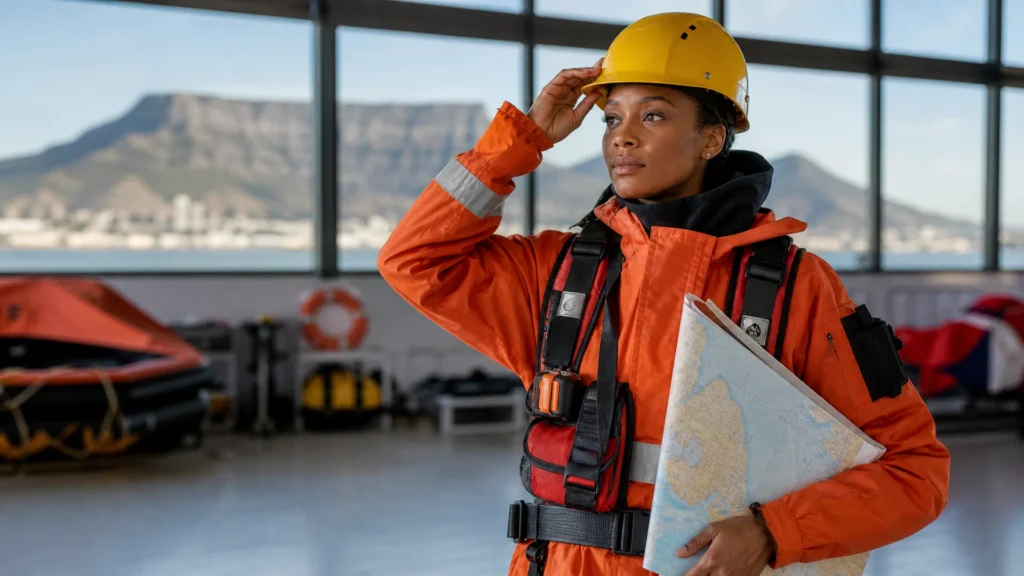
Entering the superyacht industry without prior maritime experience takes more than enthusiasm. It takes verifiable proof you can handle emergencies at sea. For career changers targeting employment in 2026 or 2027, an STCW course in Cape Town for beginners is the first step toward professional credibility and legal compliance on board. This training establishes your baseline safety competency before you set foot on a vessel, and it tells captains and crew agents you understand the fundamental responsibilities of working at sea.
Why Cape Town Is the Ideal Launchpad for STCW Training
Cape Town has become a strategic entry point for superyacht careers because its accredited training infrastructure lines up with international hiring cycles and seasonal demand. Career changers who complete STCW in Cape Town during October and November time their certification to land fresh right as peak Mediterranean recruitment opens in early 2027, when yacht owners start staffing for the summer season. Local academies have adapted their curriculum for adult learners moving over from non-maritime careers, so the training doesn’t carry the intimidation factor often associated with traditional merchant navy environments.
The city’s maritime scene puts you in direct contact with industry professionals who know the specific pathways open to newcomers right now. Instructors here work within the South African yachting hub and keep direct connections to recruitment networks across Europe and the Caribbean. That means your training happens in a live operational environment rather than an isolated classroom, with context that theory alone can’t give you.
Understanding STCW Certification for Superyacht Beginners
STCW Basic Safety Training is the non-negotiable legal baseline for all commercial vessel crew, separate from role-specific superyacht courses that cover hospitality or deck operations. It proves you have the minimum safety competency international law requires, whether you plan to serve champagne or navigate open waters. It isn’t a specialized qualification. It’s the mandatory foundation every other maritime credential is built on.
The Four Mandatory Modules Explained
The standard five-day program covers four core competencies every crew member must demonstrate before joining a commercial vessel. Personal Survival Techniques teaches you how to abandon ship safely, use life rafts correctly, and survive in water while wearing protective gear. Fire Prevention and Fire Fighting goes beyond extinguisher basics into breathing apparatus drills, hose management, and team-based suppression tactics in simulated smoke-filled environments.
Elementary First Aid covers maritime-specific medical scenarios where professional help may be hours away: CPR, bleeding control, shock management under pressure. Personal Safety and Social Responsibilities addresses the human side of shipboard life, including emergency procedures, pollution prevention, and communication across multicultural crews. Superyacht Training Academy builds its STCW delivery for adult learners coming from non-maritime careers, with practical scenarios calibrated to superyacht emergency protocols rather than generic merchant navy standards.
Validity and Refresher Requirements
Certificates issued in South Africa are recognized globally under IMO standards, but they carry strict validity periods that directly affect your employability. STCW Basic Safety Training certificates from SAMSA-accredited providers in Cape Town are recognized across all major yacht flag states, including Cayman Islands, Malta, and Marshall Islands. They expire after five years, though, and need documented refresher training to stay valid for commercial service.
Timing your initial certification matters for long-term career continuity. Complete training too far ahead of your intended start date and you risk needing expensive updates before landing your first position. Most employers expect fresh certifications from new entrants, they read recent training as evidence of current competency and serious commitment to the profession.
How to Book Your STCW Course in Cape Town
Securing your place means navigating administrative steps that catch many first-time applicants off guard if they wait too long. The enrollment process starts well before you arrive at the training facility, and it demands the same preparation expected of you on board. You can’t simply show up and pay cash; documentation and advance planning are prerequisites for admission.
Prerequisites and Medical Clearance
Before registering for any STCW course, you need an ENG1 medical certificate from an approved maritime physician confirming your fitness for sea service. This exam checks vision, hearing, cardiovascular health, and your overall physical capability to perform emergency duties without endangering yourself or others. Review the specific ENG1 medical certificate requirements before booking your appointment, since certain conditions may call for additional testing or specialist clearance that extends processing time.
Training providers won’t let you into the practical modules without verified medical clearance on file. Arrive without it and you’re excluded from hands-on activities immediately, which wastes both your tuition and valuable training days. Schedule your medical exam at least three weeks before your intended course start date to leave room for follow-up assessments or administrative delays.
Securing Your Spot During Peak Season
Popular intakes fill months ahead of the 2026/2027 summer season, so career switchers who can’t afford scheduling gaps need to plan early. Cape Town sees a demand spike between September and November as candidates race to certify before Mediterranean hiring peaks. Wait until you arrive to book and you’re often stuck with suboptimal dates, or paying more to train somewhere else instead.
Contact training providers directly to confirm availability and secure a provisional reservation while you complete medical clearance. Deposits typically hold your spot pending final documentation, giving you room to manage prerequisite logistics without losing your preferred intake dates. That’s the same forward-thinking mindset captains value in prospective crew.
What Happens During STCW Training Day-to-Day
A typical five-day schedule balances intensive classroom instruction with physically demanding drills built to create muscle memory under stress. Mornings usually cover theory through interactive presentations and case studies relevant to superyacht operations. Afternoons shift entirely to hands-on application in controlled training environments, a rhythm that prevents cognitive overload and gets concepts into your body, not just your notes.
Classroom Theory vs. Practical Drills
Theory sessions focus on why procedures exist rather than rote sequences for a written test. Instructors draw on real incident reports and vessel-specific scenarios to show the consequences of poor safety decisions in luxury marine contexts. You learn to recognize hazard patterns, communicate during crises, and make sound judgments when standard protocols meet unexpected variables.
Practical work dominates the training and makes up roughly sixty percent of total contact hours. Pool sessions teach survival swimming, life jacket deployment, and raft boarding methods that feel counterintuitive until you’ve practiced them repeatedly in wet conditions. Fire ground exercises expose you to heat, smoke, and equipment weight while reinforcing the team coordination real emergency response depends on.
Physical Demands and Assessment Standards
Assessments run pass/fail, based on demonstrated competency rather than a written score. Instructors watch your performance during drills against standardized criteria, you need to execute tasks correctly under simulated pressure without prompting or help. That’s what makes the certification mean something: it proves you can actually perform the required functions in a genuine emergency, not just describe them on paper.
Physical fitness expectations stay moderate but non-negotiable for safety-critical activities. You need to climb ladders in full gear, drag hoses across wet surfaces, and support fellow trainees during evacuation simulations. Trainees who fall short of the minimum benchmarks get remedial coaching, but nobody graduates without demonstrating acceptable proficiency across every mandatory competency.
For deeper logistical and curriculum specifics beyond this overview, see our guide to detailed STCW course expectations in Cape Town for scheduling information and module-by-module breakdowns.
Budgeting for STCW and Essential Add-On Courses
Treating STCW training as an isolated expense misreads the real financial commitment behind launching a superyacht career. Tuition covers only the mandatory safety certification, leaving gaps in employability that need further investment to close. Smart budgeting accounts for accommodation, medical exams, supplementary credentials, and living expenses during the gap between training and first employment.
Consult our full breakdown of superyacht crew course costs for realistic total investment figures if you’re entering the market in 2026. Beyond base tuition, most beginners need food hygiene certificates, powerboat handling qualifications, and sometimes introductory hospitality training depending on the department they’re targeting. These credentials signal versatility to employers sorting through hundreds of applications for a handful of entry-level positions.
Accommodation near training facilities varies a lot in price and quality, and it affects both comfort and the networking you’ll do during your stay. Many candidates choose shared housing with fellow trainees, which cuts costs and builds peer relationships that often lead to job referrals later. Factor in transportation, meals, and incidental supplies so financial stress doesn’t distract you from the training itself.
Transitioning From Training to Your First Yacht Job
Completing STCW certification is the start of your professional journey, not the end of it. Fresh credentials open conversations with recruiters and captains, but turning those conversations into actual employment takes deliberate follow-through and positioning within the local maritime community. Passive waiting rarely produces results in an industry where reputation and demonstrated initiative drive hiring decisions.
Leveraging Cape Town’s Crew Network
Training locally puts you in direct contact with agents and captains active in the South African yachting hub who regularly source crew from accredited programs. Attend industry events, join local crew social media groups, and introduce yourself to agency representatives while your training is still fresh. These relationships give you insider knowledge about upcoming vacancies, vessel preferences, and interview expectations that a generic job board never will.
Instructors and academy staff often act as informal referral sources for employers looking for reliable entry-level candidates with verified training. Show up professionally throughout your course, ask good questions, and show genuine interest in learning rather than just collecting the certificate. Word-of-mouth carries real weight in a maritime community this tight-knit, where trust matters more than a polished resume.
Next Steps After Certification
Update your CV immediately after graduation with precise terminology that applicant tracking systems and human reviewers both recognize. Register with several reputable crew agencies specializing in superyacht placements, with a complete documentation package: scanned certificates, references, updated photographs. Crew agents consistently report that candidates who pair STCW with role-specific introductory courses land placements at a higher rate than those holding safety certification alone.
Consider a combined deck-stew career course to maximize versatility for entry-level positions on smaller vessels, where dual-role capability makes you more hireable. Keep building relevant skills through self-study, volunteer work, or part-time hospitality positions while you search for permanent placements. Persistence and continuous improvement are what separate the candidates who get hired from those who assume the certificate alone will do the job.
If you’re starting a superyacht career with no experience, remember STCW is your foundational credential, not your complete professional identity.
Common Beginner Mistakes to Avoid in Cape Town
Booking with an unaccredited provider is the most costly error newcomers make when researching STCW options online. Only SAMSA-approved institutions issue certificates recognized internationally, so verify accreditation before you commit money or book travel. Unrecognized credentials waste time and money, and they create a false confidence that collapses the moment an employer checks.
Arriving without proper medical clearance, or assuming a minor health issue won’t matter, is a judgment call instructors and future employers notice immediately. Maritime medicine exists precisely because seemingly small conditions can turn into real liabilities in isolated ocean environments. Treat these requirements as professional standards, not bureaucratic obstacles someone invented to slow you down.
Treating STCW as a standalone qualification, without complementary entry-level training, limits your position in a crowded applicant pool. Safety certification proves you won’t endanger the vessel during an emergency, but it doesn’t show you can add value during normal operations. Employers who invest real resources training new hires expect dedication in return, and coming prepared signals exactly that.
This pathway demands honest self-assessment: physical readiness, financial capacity, and a willingness to start at entry level regardless of what you achieved in a previous career. Check upcoming STCW course dates and begin your enrollment process today to secure your place in the next available intake.