
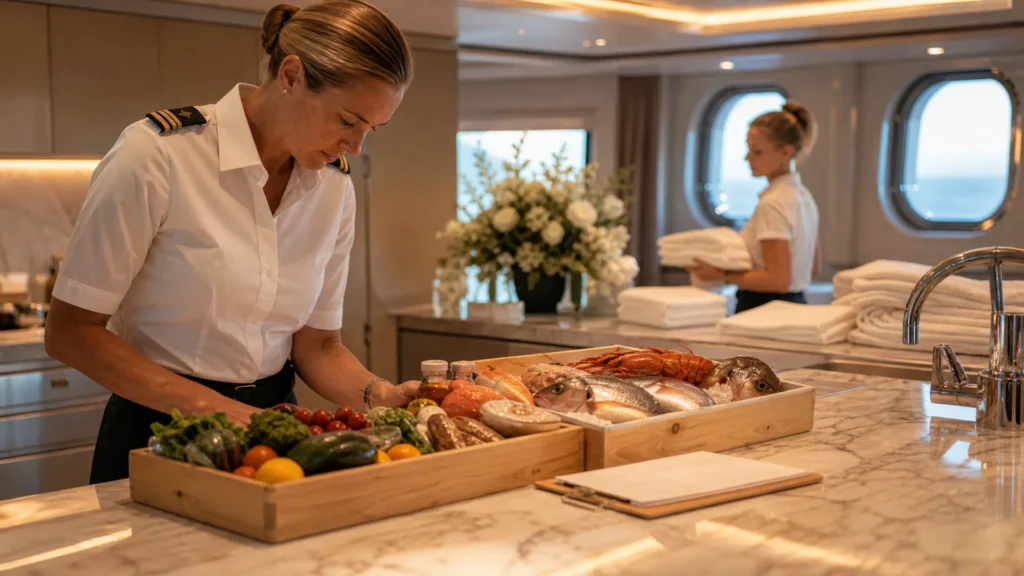
Most job listings for a Chief Steward reduce the role to a title on an organizational chart, ranking it above a stewardess and below the captain. That framing misses almost everything that matters. The real story of superyacht chief steward responsibilities and duties plays out in the small hours before breakfast service, in a provisioning spreadsheet that has to balance against a charter budget, and in the quiet authority it takes to get a nervous junior steward through their first formal dinner service. This guide breaks down what the job actually involves, day to day, so you understand what you’re stepping into and what it takes to get there.
What Does a Superyacht Chief Steward Actually Do Day to Day?
A typical day for a Chief Steward can span a pre-breakfast interior walkthrough, a provisioning call with suppliers, a service briefing with the team, and an evening guest experience debrief with the captain, often before the first charter guest even wakes up. In between, there are cabin inspections, laundry checks, flower and linen orders, and constant small adjustments to the guest schedule as plans change on board.
None of this is glamorous in the way marketing photos of yacht interiors suggest. It’s operational, repetitive in structure but never in content, because every charter guest and every owner trip brings different expectations. The Chief Steward is the person who translates those expectations into a working schedule the rest of the interior team can execute.
Chief Steward Job Description Beyond the Job Title
On paper, a chief steward superyacht job description usually lists service standards, inventory management, and guest liaison duties. In practice, it means running daily standup briefings with the interior team, checking that cabins and guest areas meet the vessel’s standard before the captain or owner sees them, and coordinating with the galley on meal timing and dietary requirements. It means catching small problems, a stained tablecloth, a late delivery, a miscommunication about arrival times, before they become guest-facing issues.
The Chief Steward also owns the guest schedule itself, working with the captain to keep excursions, meals, and turnover days aligned. That coordination role is arguably the core of the job. Everything else exists to support it.
How Chief Steward Duties Differ From Second Steward or Stewardess Roles
Understanding how interior crew roles are structured on a superyacht helps explain where the Chief Steward sits in the hierarchy. Junior stewards and stewardesses focus on execution: setting tables, cleaning cabins, delivering service to a set standard. A second steward or stewardess takes on more responsibility for a section of the interior, sometimes deputizing for the Chief Steward on smaller vessels.
The Chief Steward, by contrast, is accountable for the whole department’s output. Duties shift from doing the work to making sure the work gets done, correctly, on schedule, by other people. That distinction is what separates chief steward duties interior crew perform from the responsibilities of every rank below it.
Leadership and Crew Management Skills That Set Chief Stewards Apart
Most competing content stops at task lists. But the skills that actually separate a good Chief Steward from a struggling one are almost entirely about people, not tasks. This is where superyacht chief steward responsibilities and duties become a leadership job rather than a service job.
Building and Training an Interior Team
A Chief Steward hires, trains, and mentors junior crew, so chief steward leadership skills yacht teams rely on go well beyond hospitality technique. New stewards arrive with wildly different levels of experience, and it’s the Chief Steward’s job to bring them up to the vessel’s standard quickly, without damaging their confidence or the guest experience in the process.
That means running informal training sessions on silver service or wine pairing, giving direct feedback after a service that didn’t go smoothly, and knowing when to step in versus when to let a junior crew member work through a problem themselves. Delegation is a skill in its own right here. A Chief Steward who can’t let go of tasks ends up exhausted and bottlenecked. One who delegates well builds a team that can function even when they’re not in the room.
Managing Conflict, Rotas, and Owner Expectations Under Pressure
Rota building sounds administrative until you’re doing it around a charter calendar with back-to-back guest changeovers, crew leave requests, and a captain who needs the interior team available for an unscheduled owner visit. Getting this wrong means burnt-out crew and gaps in service coverage. Getting it right is largely invisible, which is exactly the point.
Conflict management is a constant undercurrent. Interior teams live and work in close quarters, and personality clashes are inevitable over a season. A Chief Steward has to mediate those situations quickly, without letting them spill into guest-facing service, while also managing the relationship between guest requests, the captain’s priorities, and what’s realistically achievable on board. This is the part of the role that’s hardest to teach in a classroom, which is why real leadership training matters as much as service technique. It’s covered in more depth in Chief Stewardess training and leadership certifications.
Provisioning, Compliance, and Guest Experience Management
Beyond people management, the Chief Steward carries a significant operational and administrative load that rarely makes it into job title summaries.
Budgeting and Provisioning for Charters and Owner Trips
On a vessel running back-to-back charters, the Chief Steward is often the one reconciling the provisioning budget against actual spend, flagging overruns before they become a problem for the captain or management company. This involves building relationships with suppliers at each port, forecasting guest preferences before arrival, and tracking inventory across multiple storage areas on board.
Budgeting for a superyacht chief steward isn’t a once-a-month task. It’s a running calculation that adjusts every time a charter contract changes, a guest adds a dietary request, or an owner extends their trip by a few days. Getting provisioning wrong doesn’t just cost money. It directly affects guest experience if the right ingredients or supplies aren’t on board when needed.
Health, Safety, and Compliance Duties Interior Crew Must Handle
Interior crew aren’t deck-focused, but they still carry meaningful compliance responsibilities. Chief Stewards typically manage safety-related documentation for the interior, tracking chemical storage, supporting galley hygiene standards, and ensuring the team follows safety drills alongside deck and engineering departments. Much of this ties into the broader ISM and ISPS frameworks that govern vessel safety and security management, even though interior teams aren’t the primary owners of those systems.
Guest safety briefings, muster station procedures, and basic first aid readiness also fall partly under the Chief Steward’s oversight, since interior crew are often the closest crew members to guests during an emergency. This compliance layer is a big part of why superyacht chief steward certifications required for the role go beyond hospitality qualifications alone.
Training and Certifications Required to Become a Superyacht Chief Steward
Because the role blends hospitality, safety, and leadership, the certification pathway is broader than many newcomers expect.
Core STCW and Interior-Specific Courses
Every crew member working on a commercial or larger private yacht needs STCW (Standards of Training, Certification and Watchkeeping) basic safety training, which covers fire prevention, personal survival techniques, and basic first aid. Interior crew typically add food hygiene certification and formal silver, wine, and beverage service training on top of that baseline. These aren’t optional extras for someone aiming at Chief Steward. They’re the foundation the role is built on. A fuller breakdown of what’s expected across ranks is available in the overview of certifications required for every yacht crew role.
Advanced Leadership and Hospitality Certifications Worth Pursuing
Beyond the basics, superyacht chief steward training increasingly includes advanced hospitality courses covering guest psychology, formal event service, and interior management systems used for inventory and guest preference tracking. Leadership-specific training, covering delegation, conflict resolution, and rota management, is what actually prepares a steward for the management side of the Chief Steward role, rather than just the service side.
SYTA’s interior training pathways are built around the real progression stewards follow on board, from foundational hospitality skills to the leadership and compliance competencies expected of a Chief Steward. For stewards serious about reaching this rank, the Advanced Stewardess Career Course is designed specifically to bridge that gap between solid service skills and genuine departmental leadership.
Career Progression: How to Advance to Superyacht Chief Steward
Knowing how to become a superyacht chief steward means understanding both the timeline and the specific moves that speed up progression.
Typical Timeline and Experience Milestones
The typical path starts as a junior steward or stewardess, moves to second steward or stewardess with section responsibility, and then progresses to Chief Steward once someone has demonstrated both service excellence and management capability. Most crew report it takes several years of consistent interior experience across multiple vessel sizes before they’re considered ready to step into a Chief Steward role, since the position demands both hospitality polish and people-management maturity.
Vessel size matters too. Advancing to chief steward superyacht positions on smaller vessels can happen faster because the interior team itself is smaller and the Chief Steward role carries less management complexity. On larger vessels with bigger teams and more formal service standards, the timeline tends to stretch out, and captains and management companies look for a longer track record before promoting someone into the role. For a broader sense of how this compares across departments, see typical superyacht career progression timelines.
Tips for Standing Out When Applying for Chief Steward Roles
Cross-training across service styles, event types, and different vessel sizes makes a candidate more adaptable, which is exactly what hiring captains look for in a Chief Steward. Strong references from previous captains or head stewardesses carry real weight, since the role depends so heavily on trust and demonstrated judgment under pressure.
Formal certifications signal readiness in a way that experience alone sometimes can’t communicate to a new employer who hasn’t worked with you before. Pairing solid sea time with recognized leadership and hospitality training, rather than relying on service experience alone, is consistently what separates candidates who get shortlisted for Chief Steward roles from those who don’t.
Once you’re weighing whether the role and its progression make sense for you financially, it’s worth comparing steward salary and benefits by rank alongside the interior crew salary ranks and rates to understand how compensation shifts as responsibility increases.
Reaching Chief Steward isn’t just about clocking years at sea. It’s about building the leadership, compliance, and provisioning skills the role genuinely demands, and being able to prove you have them when a captain is deciding who runs their interior department.