
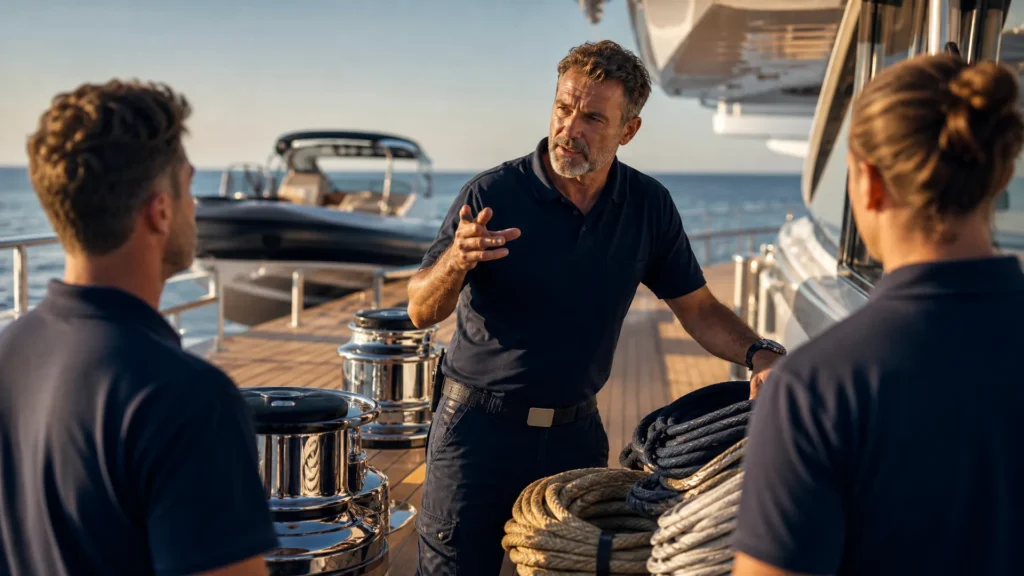
The bosun rank sits at the heart of every well-run superyacht deck department. It’s the role where technical skill, leadership, and hands-on graft come together. If you’re mapping out the superyacht bosun responsibilities and career path, this guide covers what the job actually involves, the certifications you’ll need, and how the role opens the door to officer ranks.
What Does a Superyacht Bosun Do?
A bosun links the deck crew to the officers above them. On most yachts, the bosun answers directly to the chief officer and turns the officer’s plans into daily deck work.
The role covers maintenance scheduling, tender operations, and watch-keeping oversight. A bosun tracks varnish and paint cycles, manages the deck stores, and keeps equipment like winches, cranes, and anchors in working order.
Tender operations sit firmly on the bosun’s plate too. That means driving guests, coordinating fuel and safety checks, and keeping the tender garage organized and ready for the next outing.
On a 50m+ motor yacht, a bosun typically runs the deck maintenance schedule, briefs the crew before every guest changeover, and acts as the chief officer’s right hand during anchoring and tender operations. That mix of planning and hands-on execution defines the job at every vessel size. Bigger yachts just mean more moving parts.
Superyacht Bosun vs Deckhand Responsibilities
Deckhands carry out tasks. Bosuns own the outcome. That’s the clearest way to separate superyacht bosun vs deckhand responsibilities.
A deckhand might polish stainless steel, wash the deck, or help with a tender launch under direction. A bosun decides what needs doing, in what order, and checks the standard once it’s done.
Accountability is the real step-up. If a splice fails or a maintenance job gets missed, the bosun answers for it. That shift in ownership is exactly why the role demands more experience, more judgment, and stronger communication skills than a standard deckhand position.
Deck Crew Management: The Bosun’s Leadership Role
Superyacht bosun deck crew management is as much about people as it is about equipment. General maritime guides tend to focus on ship-wide bosun duties in commercial shipping. On a yacht, though, the interpersonal demands are sharper. The crew works and lives together in tight quarters, often for months at a time.
Daily Deck Operations and Standards
Every day starts with a plan. The bosun sets priorities, allocates tasks, and makes sure the deck meets the standard guests and owners expect.
That includes running toolbox talks before any job that carries risk, whether it’s working aloft, handling lines under load, or launching a tender in tricky conditions. It also means checking work as it’s completed, not just handing out tasks and moving on.
Coordination with the chief officer runs through the whole day. The bosun feeds back on progress, flags problems early, and adjusts the plan when weather, guest schedules, or breakdowns get in the way.
Managing Junior Crew and Training
Mentoring is a core part of the job. A bosun trains new deckhands on knots, splicing, tender handling, and yacht-specific systems that no course can fully replicate.
Chief officers commonly describe a good bosun as the person who makes the deck department run itself, freeing the officer to focus on navigation, compliance, and guest liaison. That trust only builds once a bosun proves they can manage people, not just tasks.
Handling personality clashes, motivating tired crew after a long charter season, and giving honest feedback are all part of the leadership side of the role. It’s a skill set that develops with time and deliberate effort. It doesn’t arrive automatically with rank.
Certifications and Training Required to Become a Bosun
Superyacht bosun certifications build on the same foundation every deck crew member needs, then add layers of practical and supervisory competence.
STCW and Deck Officer Qualifications
STCW Basic Safety Training is the entry point for any seagoing crew member. It covers firefighting, first aid, personal safety, and sea survival. From there, most bosuns hold tickets like Powerboat Level 2, PWC (Personal Watercraft) endorsement, and a tender operator qualification, since running tenders safely is central to the job.
Many bosuns also work toward a Yachtmaster qualification, particularly if they’re eyeing officer ranks down the line. For a full breakdown of what’s expected at each rank, it helps to look at the certifications required for every crew role, and the STCW basics are worth reviewing in detail through STCW certification basics explained.
Recommended Advanced Deckhand Courses
Superyacht bosun training pathways increasingly include structured advanced deckhand courses. These go beyond entry-level STCW and cover leadership, maintenance planning, and the technical skills captains look for when filling a bosun vacancy.
At Superyacht Training Academy, we design our Advanced Deckhand Career Course around the exact skills captains look for when promoting a deckhand into a bosun role. The course bridges the gap between basic deckhand tickets and the supervisory competence a bosun position demands.
How to Become a Superyacht Bosun: The Career Path
There’s no single formula for how to become a superyacht bosun, but the route follows a fairly consistent pattern across the industry. Deckhands who show reliability, technical aptitude, and a willingness to lead tend to get noticed first.
Building broad experience across different vessel types and sizes helps too. It’s worth understanding deck crew career progression and certifications as a whole before setting your sights specifically on the bosun rank.
Typical Timeline From Deckhand to Bosun
It generally takes several seasons of deckhand work, often two to four years, before crew are considered ready for bosun responsibilities. That timeline depends heavily on the yacht’s size, the crew turnover rate, and how proactively a deckhand pursues extra qualifications and responsibility.
Crew who take on lead deckhand duties, complete advanced courses, and build a reputation for reliability tend to move faster. Those who stay in one role without stretching themselves often plateau longer than necessary.
For a broader view of how this stage fits into the bigger picture, the full superyacht career progression timeline lays out every rank from entry-level deckhand through to captain.
Superyacht Bosun Salary and Benefits
Bosun salary and benefits vary by vessel size, itinerary type, and the individual’s experience. Larger yachts and busy charter programs tend to pay more, reflecting the heavier workload and higher guest-service demands.
Pay generally sits above deckhand level, reflecting the added responsibility and supervisory role. It’s worth checking how deckhand salaries compare by vessel size to see the baseline a bosun’s pay builds on.
Beyond the base salary, bosuns typically receive gratuities on charter yachts, which can add meaningfully to total earnings during a busy season. Accommodation, meals, and travel to and from the vessel are usually covered as well, and many bosuns see the world as part of the job.
Private yachts often offer a steadier, less charter-driven income with fewer gratuities but more predictable scheduling. A bosun moving from a busy charter yacht to a private vessel often finds the job shifts from constant guest-facing pressure to longer-term maintenance and refit planning. Neither path is objectively better. It comes down to what kind of lifestyle and workload someone wants.
Career Advancement Beyond Bosun
Reaching bosun is a milestone, not a ceiling. The skills built in the role, from crew leadership to maintenance planning to tender operations, translate directly into officer-level competence.
Moving Into Officer Ranks
Many bosuns use the rank as a springboard into deck officer training, working toward tickets like OOW (Officer of the Watch) and eventually Chief Officer. The supervisory experience gained as a bosun gives a real head start when it comes to managing a full deck department under an officer title.
If you’re already thinking beyond the bosun rank, it’s worth looking into moving into deck officer training early, since the qualifications take time to complete alongside sea service requirements.
Bosun work builds the foundation for almost every path forward in the deck department. If you’re a deckhand ready to take that step up, the Advanced Deckhand Career Course at Superyacht Training Academy is built to get you there, with the practical skills and certifications captains look for when they’re ready to promote from within.