
Before any yacht captain considers hiring you, they’ll want to see one document in your file: a valid ENG1 medical certificate. It’s one of the first hurdles every first-time superyacht crew applicant faces, and it catches many people off guard. Understanding what it covers, what can go wrong, and where to get it done near Cape Town saves time and money before you even start job hunting.
What Is the ENG1 Medical Certificate and Why Yacht Crew Need One
An ENG1 medical certificate is a seafarer medical fitness test. It confirms you’re physically fit to work at sea. The certificate follows a standard set by the UK’s Maritime and Coastguard Agency. Yachting crews recognise it worldwide, not just on British-flagged vessels.
Without it, no captain or crew agent will put you forward for a job. It’s a legal requirement, not a formality. Yachts carry it as proof that every crew member on board can handle physical duties and respond in an emergency. It also shows a crew member won’t pose a health risk once at sea, far from a hospital.
How ENG1 Fits Alongside STCW Requirements
First-time applicants often assume STCW training covers everything they need. It doesn’t. STCW Basic Safety Training teaches the safety skills required to work on board: firefighting, sea survival, first aid, personal safety. The ENG1 confirms you’re medically fit to use those skills.
Recruiters and crew agents routinely list ENG1 as a non-negotiable prerequisite alongside STCW Basic Safety Training before they’ll submit a candidate’s CV to captains. Both are separate documents, issued by separate authorities. Both get checked before an offer is made. Most people booking STCW courses in Cape Town also sort out their ENG1 exam in the same trip, since you need both before you can even start applying for jobs.
If you’re weighing up the full set of documents needed to work on board, it helps to look at the full list of certifications required for every role before you book anything.
What Happens During the ENG1 Medical Exam
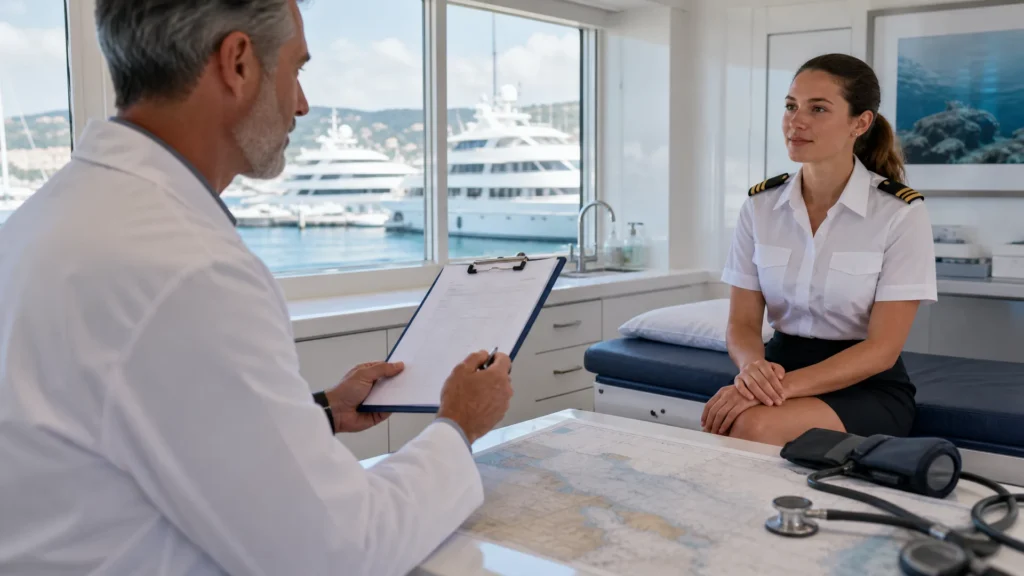
The ENG1 exam is a straightforward physical, usually done in under an hour. An approved doctor asks about your medical history, takes your blood pressure, and checks your general health. You’ll also do a urine test that screens for conditions like diabetes and kidney problems.
The doctor will ask about any existing conditions, medications, past surgeries, and allergies. Be honest here. Undeclared conditions discovered later can void your certificate and jeopardise your job.
Vision, Hearing and BMI Checks Explained
Vision testing checks both your distance sight and your ability to distinguish colours, since colour blindness affects certain roles at sea. If you wear glasses or contacts, bring them. The doctor tests your corrected vision as well as uncorrected.
Hearing is checked in both ears, usually with a simple tone test, to confirm you can hear alarms and verbal instructions in a working environment. The doctor also measures your height and weight to calculate BMI. Body composition affects mobility, fitness for physical tasks, and evacuation ability in an emergency.
Common Reasons Candidates Fail the ENG1 Exam
Most fails aren’t dramatic. They’re usually one of four things: uncorrected vision below the required standard, hearing loss beyond the accepted threshold, a BMI outside the acceptable range, or an undisclosed medical condition that surfaces during questioning or testing.
Vision problems are common among first-timers who haven’t had an eye test in years. Hearing loss, often mild and unnoticed day to day, can also trip up otherwise fit candidates. BMI is a frequent stumbling block too, particularly for applicants who are fit but carry more muscle mass, or who haven’t addressed weight in the lead-up to their appointment.
A common scenario among first-time applicants: failing the vision or BMI component and needing a short window to retest before a job offer deadline. None of these are usually permanent barriers. Most are manageable with correction, treatment, or a bit of preparation before your appointment.
Where to Get an ENG1 Medical Certificate in Cape Town
You need an MCA-approved doctor to issue a valid ENG1. Not every GP or clinic can do this. The doctor must be specifically registered with the scheme. Approved ENG1 doctors operate in and around Cape Town, so crew based there for STCW training can complete both requirements in the same trip.
SYTA advises new crew applicants in Cape Town on scheduling ENG1 exams alongside STCW course dates so certification timelines line up before job hunting begins. Booking both in the same week means you leave with two of the core documents recruiters ask for, rather than making a second trip later.
Bring a valid passport, your glasses or contacts if you use them, and a list of any current medications. Costs vary by clinic and by whether you need any additional tests. It’s worth confirming price and required documents when you book, since requirements can shift slightly between practices.
How Long Is an ENG1 Certificate Valid
ENG1 certificates are typically valid for up to two years for crew under 18, and up to five years for most working seafarers. The examining doctor can issue shorter validity if they note a health concern. If the doctor flags something during your exam, such as a borderline reading, a condition under management, or a query that needs monitoring, they may issue the certificate for one year instead of the full term.
Plan your renewal before your certificate expires. A lapsed ENG1 means you can’t legally work until you’ve retested, and most yacht owners and managers won’t allow a gap in valid certification.
ENG1 Medical Failed: What to Do Next
A failed or restricted ENG1 result isn’t the end of your yacht career plans. If you fail on vision, get an updated prescription and retest once your correction meets the standard. If hearing is the issue, a specialist referral can clarify whether the loss is treatable, or whether it falls within an acceptable range with further assessment.
BMI-related fails often just need time. Some candidates take a few months to adjust their fitness and weight before retesting successfully. If an undisclosed or newly identified medical condition is the issue, your doctor can advise on treatment and whether a modified or restricted certificate is possible in the meantime.
Whatever the reason, don’t assume one failed exam closes the door. Retesting is common, and most first-time issues are fixable with the right follow-up.
Next Steps Once You’re Certified
Once you’re holding a valid ENG1, you’ve cleared one of the two entry requirements every yacht job needs. Pair it with your STCW Basic Safety Training, and you’re in a position to start applying seriously.
From there, it’s worth getting your paperwork in order for job hunting, including getting your CV ready for recruiters. Many candidates also complete a yacht crew first aid certification, since it’s another commonly requested credential alongside STCW and ENG1.
If you’re still deciding how to start, it helps to look at what’s involved in starting a yacht career with no experience before booking your training. And once you’re ENG1-certified and ready to train, SYTA’s Deck/Stew career course is the practical next step toward building the qualifications captains and crew agents look for.