
Breaking into the superyacht industry starts with one question: what do you actually need to get hired as a deckhand? The answer isn’t complicated, but it is specific. Knowing the training requirements upfront saves you time, money, and false starts. This guide walks through which certifications you need, in what order, what each course involves, and what it typically costs to go from zero experience to your first contract.
What Are the Entry Requirements for a Superyacht Deckhand?
Before you book a single course, it helps to know what captains and agencies actually expect from a first-time applicant. The bar is lower than most newcomers assume. Still, a handful of basics are non-negotiable.
Age, Fitness & Eligibility Basics
Most yachts require deckhands to be at least 18. You’ll also need a valid passport, and ideally a seaman’s book or discharge book once you start accumulating sea time.
Reasonable fitness matters more than any gym record. You’ll haul lines, fender, clean, and stand watches in sun and salt spray for long hours. Being a confident swimmer is essential too, since safety drills and tender work both assume basic water competence.
A clean medical history helps, since you’ll eventually need a medical certificate to work legally aboard.
Do You Need Experience to Start?
This is the question most newcomers ask first: can you become a superyacht deckhand with no experience? Yes. Deck departments hire entry-level crew all the time, and most junior deckhands have never set foot on a yacht before their first contract.
What replaces experience at this stage is certification and attitude. A candidate with the right qualifications, a fit body, and a willingness to learn is far more hireable than someone with vague boating knowledge and no paperwork. That’s why the right qualifications, not prior sea time, form the real entry ticket into deck crew work.
STCW Basic Safety Training: The Non-Negotiable Starting Point
No discussion of deck crew requirements can skip STCW. It’s the one certificate every deckhand needs before they can legally step aboard a commercial or charter vessel, anywhere in the world.
What the STCW Course Covers
STCW Basic Safety Training is built around five core modules: personal survival techniques, fire prevention and firefighting, elementary first aid, personal safety and social responsibility, and security awareness. Together, they teach you how to respond to onboard emergencies, work safely as part of a crew, and understand your responsibilities under maritime law.
This isn’t a superyacht-specific course. It’s the international baseline used across commercial shipping and yachting alike. That’s why every serious deckhand certification pathway starts here.
How Long It Takes and What It Costs
Most STCW Basic Safety Training courses run across roughly a week of combined classroom and practical modules before a candidate is considered vessel-ready. Expect theory sessions, pool-based survival drills, and firefighting exercises using real equipment.
Costs vary by training provider and location. It’s worth comparing accredited centres directly rather than assuming a fixed price. What matters more than the exact fee is choosing a provider with proper maritime accreditation. Captains and agencies will check that your certificate is recognised.
Additional Certifications That Help Superyacht Crew Stand Out
STCW gets you in the door. It doesn’t make you stand out in a crowded pool of job-seeking deckhands. A handful of add-on courses meaningfully improve your hireability.
Powerboat Course and Tender Driving
An RYA Powerboat Level 2 certificate is close to essential for deck crew, since tender driving is a routine deckhand duty on most yachts. Guests need transfers to shore, water toys need supervising, and someone has to handle the chase boat during watersports.
A powerboat course for superyacht work typically covers boat handling, close-quarters manoeuvring, and basic navigation. It tells a captain you can be trusted with the vessel’s tender without extra hand-holding.
ENG1 Medical Certificate and Other Add-Ons
The ENG1 medical certificate confirms you’re fit to work at sea, and most yachts won’t sign you on without one. It’s a straightforward exam covering vision, hearing, and general health.
Beyond ENG1, security awareness training and a Deck/Stew hybrid course can widen your options considerably. Smaller yachts often hire generalist crew who can cover both deck and interior duties. A hybrid qualification opens up a broader range of entry-level roles than a deck-only certificate.
Step-by-Step Course Sequence: From Zero to Job-Ready Deckhand
Knowing which courses exist is one thing. Knowing what order to take them in, and how long the whole process realistically takes, turns a list of certificates into an actual plan.
The Recommended Training Order
Start with STCW Basic Safety Training. It’s the prerequisite for almost everything else, and the one certificate no yacht will skip. Once that’s done, move on to your powerboat course, which builds practical, job-relevant skills on top of your safety foundation.
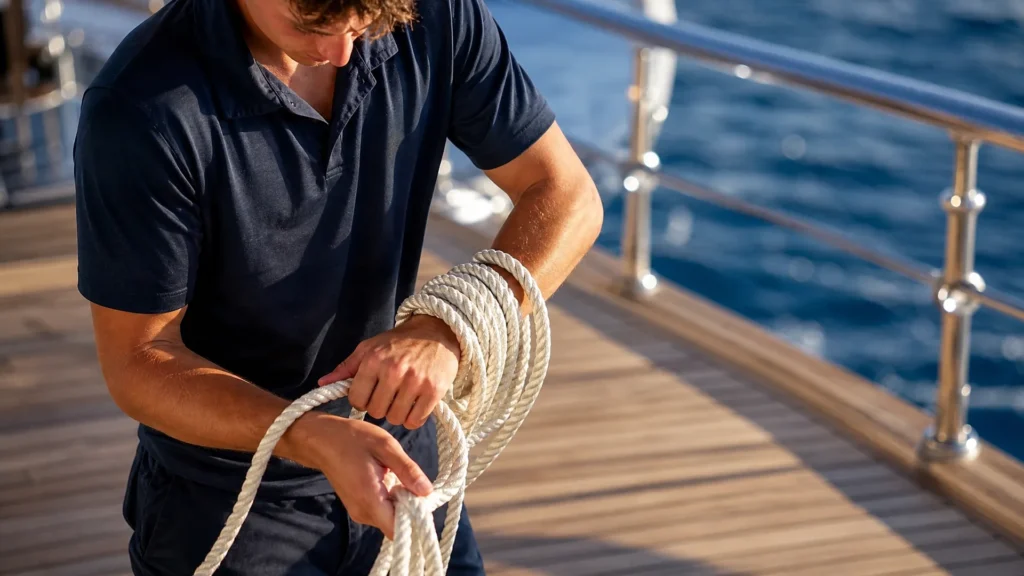
From there, get your ENG1 medical certificate sorted, ideally in parallel with your other courses since it just requires booking a medical exam. Candidates who want a stronger CV can round things out with an advanced deckhand module covering rope work, deck maintenance, and watch-keeping basics.
SYTA’s Cape Town campus structures its deckhand pathway around the same STCW-first, powerboat-second sequence that captains expect to see on a junior deck CV. That consistency matters. Agencies and captains recognise a properly sequenced set of certificates as a sign of a serious, well-prepared candidate.
Typical Timeline to Your First Job
Most candidates can complete STCW, powerboat, and ENG1 within a few weeks of dedicated, back-to-back training. Add time for CV preparation, networking, and dock-walking or agency registration in a crew hub, and a realistic window from starting training to landing a first contract runs to several weeks or a couple of months.
That timeline shortens considerably for candidates who train somewhere with strong placement links into the charter and refit seasons. Fewer steps stand between finishing courses and getting in front of hiring captains.
What Captains and Crew Agencies Look for in a Deckhand CV
Certificates get your CV past the first filter. What gets you hired is everything around them.
Crew agencies consistently rate attitude, fitness, and certificate readiness above prior sea time when assessing entry-level deckhand candidates. A tidy, honest CV that lists your STCW, powerboat, and ENG1 certificates clearly, with a professional photo and no exaggerated claims, goes a long way.
Trainability matters as much as any single qualification. Captains know new deckhands need to learn the specific systems and standards on board. A candidate who shows up fit, punctual, and coachable often outperforms one with a longer but scattered course history.
Stacking your certificates in the right order, and being ready to travel and start work on short notice, both signal professionalism before a captain has even met you.
Deckhand to Bosun: Career Progression and Salary Expectations
Deckhand is an entry point, not a ceiling. The deck department has a clear ladder for crew who put in the seasons and keep building qualifications.
Entry-Level Superyacht Deckhand Salary
Entry-level deckhand pay sits at a modest but livable starting point. Most junior deckhands are trading limited experience for accommodation, food, and travel covered aboard. Pay typically rises with each season of proven sea time and each additional certificate earned.
Pay structures vary by yacht size, itinerary, and employer, so treat any figure you hear as a starting benchmark rather than a guarantee. What’s consistent across the industry is that salary climbs steadily as you move up the deck ladder.
Climbing the Deck Department Ladder
The typical deck officer progression runs from deckhand to lead deckhand, then bosun, and eventually into officer ranks for those who pursue further maritime qualifications. Each step brings more responsibility, from routine maintenance and watchkeeping to supervising other deckhands and managing deck operations.
A typical entry-level deckhand moves up to lead deckhand within one to two seasons once they’ve stacked STCW, ENG1, and a powerboat certificate alongside solid references. Moving from deckhand to bosun generally takes additional seasons of sea time plus supervisory experience, since bosuns are expected to manage both people and equipment.
For crew who want to keep climbing beyond bosun into officer roles, further study through recognised deck officer pathways becomes the next logical step.
Why Train in Cape Town, South Africa?
Where you train shapes how quickly you get hired. Cape Town has become a recognised launchpad for new crew because of its lower cost of living, established training infrastructure, and proximity to the Med and Caribbean charter seasons.
Deckhand training in South Africa also benefits from a concentration of accredited maritime training providers. Candidates can complete STCW, powerboat, and ENG1 courses in one location without shuttling between cities or countries. That efficiency matters when you’re trying to move from zero qualifications to job-ready in weeks rather than months.
South Africa’s position as a major refit and pre-season hub means candidates training locally often get easier access to networking opportunities, dock-walking, and agency contacts than those training in more isolated locations.
If you’re serious about learning how to become a superyacht deckhand, the practical next step is enrolling in a structured pathway rather than piecing together individual courses. SYTA’s Cape Town-based training runs from STCW Basic Safety Training through to the Advanced Deckhand Career Course, giving you the full certificate stack and the local support to start applying for jobs with confidence. Find a course, get certified, and put yourself in front of captains who are actively hiring this season.